
Batteries & Tyres
Power that carries
the weight of luxury.
At Speedways Electric, we manufacture our own lead-acid batteries on state-of-the-art lines, engineered for golf carts, utility vehicles, solar systems, aerial lifts, scrubber machines and material-handling equipment — paired with tyres built for the same standard of ride and durability.
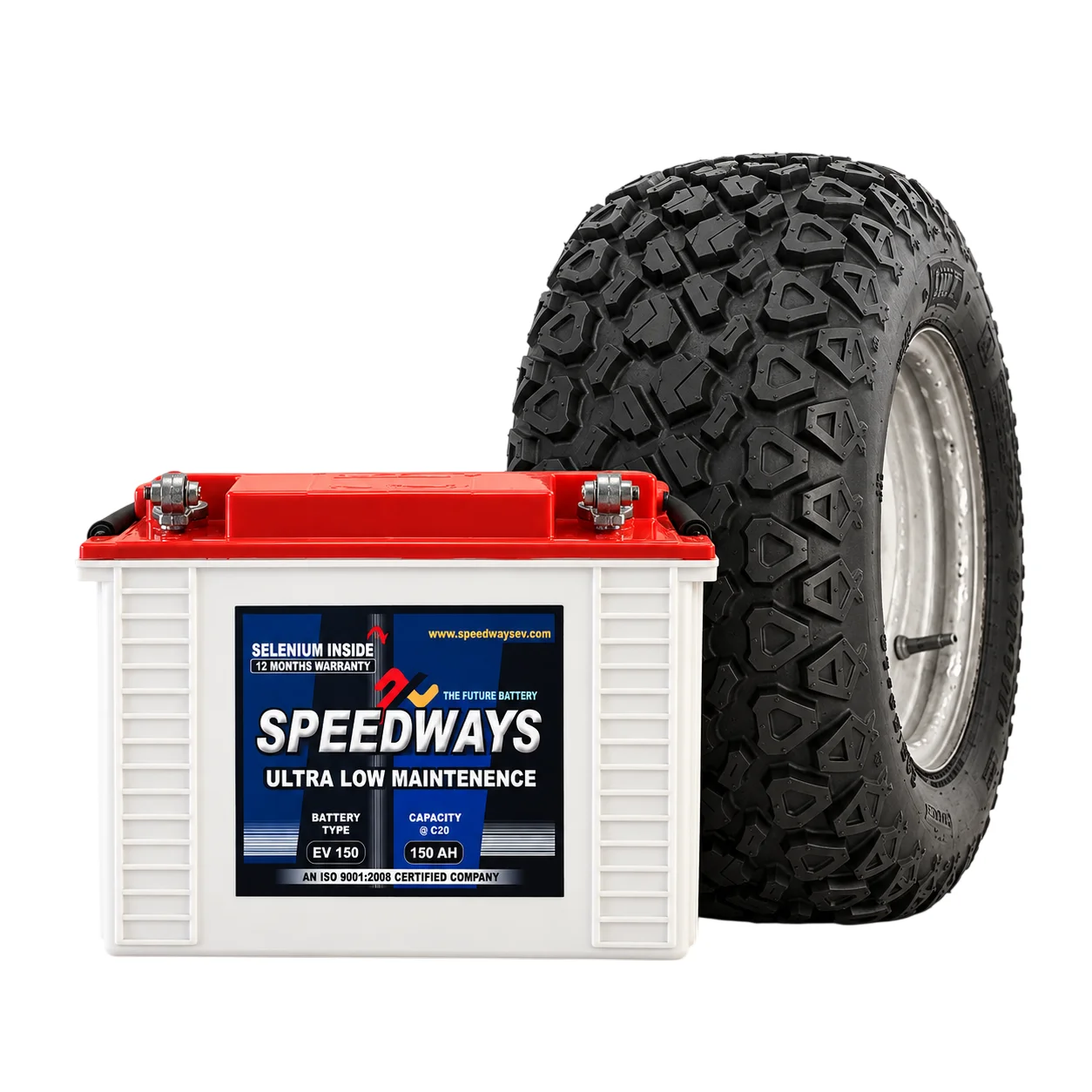
Built to outlast the job
Every Speedways battery shares the same engineering baseline, whatever the voltage or application.
-
Selenium technology
For maximum sustained performance, a longer service life and more total energy per charge.
-
Hi-Sep® separator
An advanced separator that sustains performance, extends battery life and lowers running costs.
-
Rugged by design
A manufactured polypropylene case that stands up to daily knocks and rough terrain.
-
Heat & corrosion resistant
Engineered to hold up in demanding operating temperatures and harsh environments.
-
Low self-discharge
Just 5–15% self-discharge per month, so your fleet holds its charge between duty cycles.
-
99% recyclable
Built with sustainability in mind, in keeping with the way we approach every product we make.
Lead-Acid Range
Flooded deep-cycle batteries
Deep-cycle, flooded lead-acid batteries — the electrolyte is a sulfuric-acid-and-water mix, so keep them upright. Choose by voltage and capacity to match your system and compartment.
Lithium-Ion Range
Lighter. Denser. Built for higher-voltage systems.
| Model | Length | Width | Height | Weight |
|---|---|---|---|---|
| 48V · 120AH | 840 mm | 190 mm | 185 mm | 45 kg |
| 48V · 140AH | 840 mm | 185 mm | 190 mm | 55 kg |
| 72V · 200AH | 960 mm | 250 mm | 310 mm | 95 kg |
| 72V · 230AH | 1100 mm | 315 mm | 295 mm | 150 kg |
Care Guide
Getting the most out of your battery
Six things worth knowing, from choosing a model through to day-to-day care. Our application engineers are always on hand at +91 70873 00860 if you'd rather ask directly.
Getting started: choosing the right battery
Before you begin: know your system voltage, your battery compartment's length, width and height, and your energy requirements.
1. Voltage & quantity — Match battery type and quantity to your system voltage. For a 48V system, for example, connect eight 6V batteries, six 8V batteries, or four 12V batteries. Compartment size, performance needs and cost all factor in. Leave space between batteries for airflow and minor expansion.
2. Choose the model — Start with what fits your compartment; several models share a footprint but differ in capacity. Then match capacity to your energy needs — if you're replacing an old battery, use its capacity as your baseline. Unsure? Our application engineers can help you choose.
3. Select the terminal — Pick the terminal that matches your cable connections, and use the correct cable size to avoid overheating.
Battery type & inspection
Lead-acid batteries are grouped by application and construction. Deep-cycle batteries serve RVs, golf carts, renewable-energy systems and marine use. Speedways batteries are flooded (wet-cell) — the electrolyte is a sulfuric-acid-and-water mix that can spill if the battery is overturned.
Inspection kit: baking soda, distilled water, goggles & gloves, hydrometer, post cleaner, Vaseline, voltmeter, wrench.
Caution: always wear protective clothing, gloves and goggles when handling batteries, electrolyte, or during charging.
- Check the exterior for cracks; keep posts and connections clean and free of corrosion.
- Any fluid around the battery suggests a spill or leak — repair or replace.
- Check cables and connections for looseness or fraying, and replace as needed.
- Tighten all wiring connections for good terminal contact — don't overtighten, as it can crack or melt the post.
Testing & charge levels
Visual inspection alone isn't enough — open-circuit voltage and specific-gravity readings reveal a battery's true charge, age and health.
Specific gravity test (flooded batteries only): don't add water first. Flush the hydrometer 2–4 times, draw a full sample, record the reading, then return the electrolyte to the cell — repeat for every cell. At full charge, gravity should read 1.240–1.250. If it reads low, check voltage, fully charge, and retest; if still low, run an equalizing charge.
Open-circuit voltage test: let the battery sit idle 6–24 hours with no charging or discharging, disconnect all loads, then read voltage with a DC voltmeter on the 20V setting — red probe to positive, black to negative — and check the state of charge below.
| Charge | Specific gravity | 6V | 8V | 12V |
|---|---|---|---|---|
| 100% | 1.277 | 6.37 | 8.49 | 12.73 |
| 90% | 1.258 | 6.31 | 8.41 | 12.62 |
| 80% | 1.238 | 6.25 | 8.33 | 12.50 |
| 70% | 1.217 | 6.19 | 8.25 | 12.37 |
| 60% | 1.195 | 6.12 | 8.16 | 12.27 |
| 50% | 1.172 | 6.02 | 8.07 | 12.10 |
| 40% | 1.148 | 5.98 | 7.97 | 11.89 |
| 30% | 1.124 | 5.91 | 7.88 | 11.81 |
| 20% | 1.098 | 5.83 | 7.77 | 11.66 |
| 10% | 1.073 | 5.75 | 7.67 | 11.51 |
Readings below these values point to a battery that's been discharged too long or has a bad cell — have it evaluated or retired.
Watering & cleaning
Watering: add water, never acid — distilled is best. Don't overwater; leave a 1.5mm gap at the top once the terminal is open. On a discharged battery, add just enough water to cover exposed plates, then charge fully before topping up further. Always secure the vent caps afterward, and never let plates sit exposed to air.
Cleaning: keep vent caps in place, clean the top with a baking-soda-and-water solution (kept out of the cells), rinse and dry. Use a post-and-clamp cleaner on the terminals until they show bright metal, reconnect, and finish with a thin anti-corrosive coating.
Storage, charging & discharging
Storage: fully charge before storing, keep batteries cool and dry, and monitor specific gravity or voltage — boost-charge if it drops to 70% or below. Avoid freezing temperatures and heat sources above 80°F (26.6°C); storing on concrete is fine.
Charging: follow your charger manufacturer's instructions, charge after every use, and work in a ventilated area away from sparks. Check water levels and tighten vent caps first. Avoid over- and under-charging, never charge a frozen battery, and stay below 120°F (48.8°C). A 48V system should read 50.5V at full charge.
Discharging: shallow discharges extend battery life — aim for 50% or less, with 80% as the hard ceiling. Running batteries in the 50–85% range works well if paired with periodic equalizing charges. Don't leave batteries deeply discharged for long stretches.
Common mistakes to avoid
- Undercharging — leads to sulfation and stratification, reducing performance and shortening battery life.
- Overcharging — accelerates plate corrosion, raises water use, and builds damaging heat.
- Under-watering — letting electrolyte drop below the plates causes irreversible damage.
- Over-watering — dilutes the electrolyte and can cause overflow during charging.
Tyres
Built for the same ride quality
From the fairway to the factory floor, Speedways tyres are engineered to match the comfort and durability of the vehicles they carry.
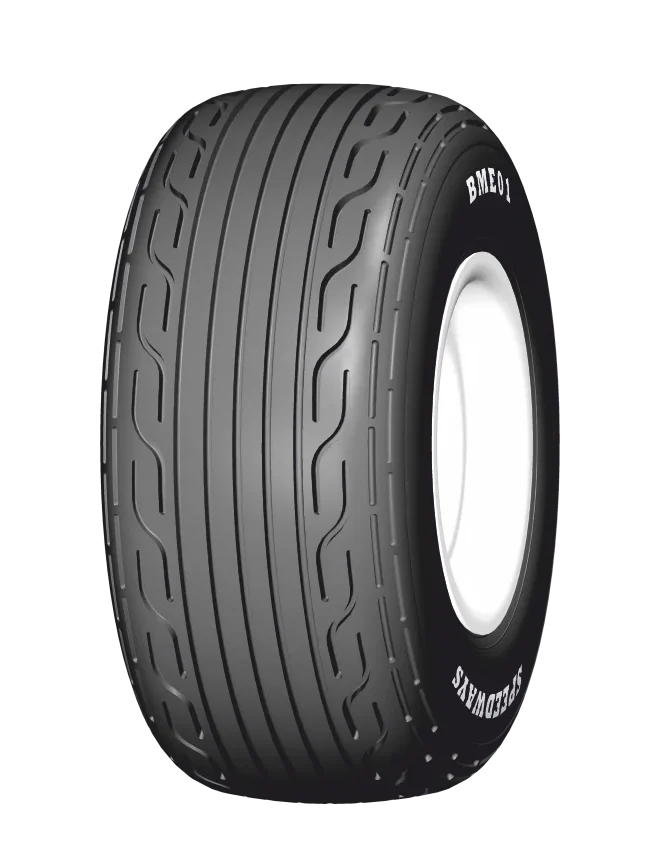
ATV · Lawn & Garden · Turf
Specially designed for golf carts, these tyres deliver excellent comfort and ground protection. The tread pattern helps prevent turf damage, which suits mover and grounds-maintenance use just as well. A gentler tread design keeps handling easy, and the compound is tuned for transport duty — including airport cruise cars — with consistent performance throughout.
Service
Keep your fleet running
Single service
A one-time inspection and service call for vehicles due a check-up — battery testing, terminal care and tyre inspection in one visit.
AMC — Annual Maintenance Contract
Scheduled, year-round coverage: routine inspections, priority turnaround, and consistent care that extends the life of your batteries and tyres alike.